
Why Is My Garage Door So Heavy?
A garage door ranks among the largest moving parts in any home. A sudden increase in weight signals a real mechanical shift, not a trick of the mind. Standard single-car doors measure roughly 8 feet wide and 7 feet high. Double-car doors stretch closer to 16 feet wide at the same 7-foot height. That scale explains why is my garage door so heavy the moment its spring system falters. A door built that large depends entirely on properly tensioned springs to offset its own bulk.
Springs and counterbalance hardware exist for exactly this reason: they carry the bulk of the load. The opener motor only has to manage a fraction of the true weight. When that system weakens, the door reverts to its full, unassisted mass. A homeowner who suddenly finds the garage door heavy to elevator manually is often feeling spring failure in real time, not a fluke of the hardware.
What does it mean when the opener button does nothing?
Pressing the wall button or remote and getting silence points to a specific mechanical breakdown rather than bad luck. Stripped gears, a disconnected trolley, or a spring that has already given out commonly sit behind that dead-air moment. Watching the door stay motionless is one of the most frustrating signals a homeowner can encounter.
Recognizing the pattern behind heaviness and unresponsiveness protects homeowners from paying for the wrong fix. Consider the range of culprits before assuming the worst:
- Weakened or broken springs that no longer offset the door’s weight
- Opener gears stripped from fighting excess resistance
- Cables or rollers under strain from the imbalance
Homeowners across the region facing a door that suddenly feels twice as heavy can rely on Precision Door of Orange County, based in Anaheim, for a professional diagnosis before further strain damages the opener or track system.
Could a Broken Spring Be the Culprit?
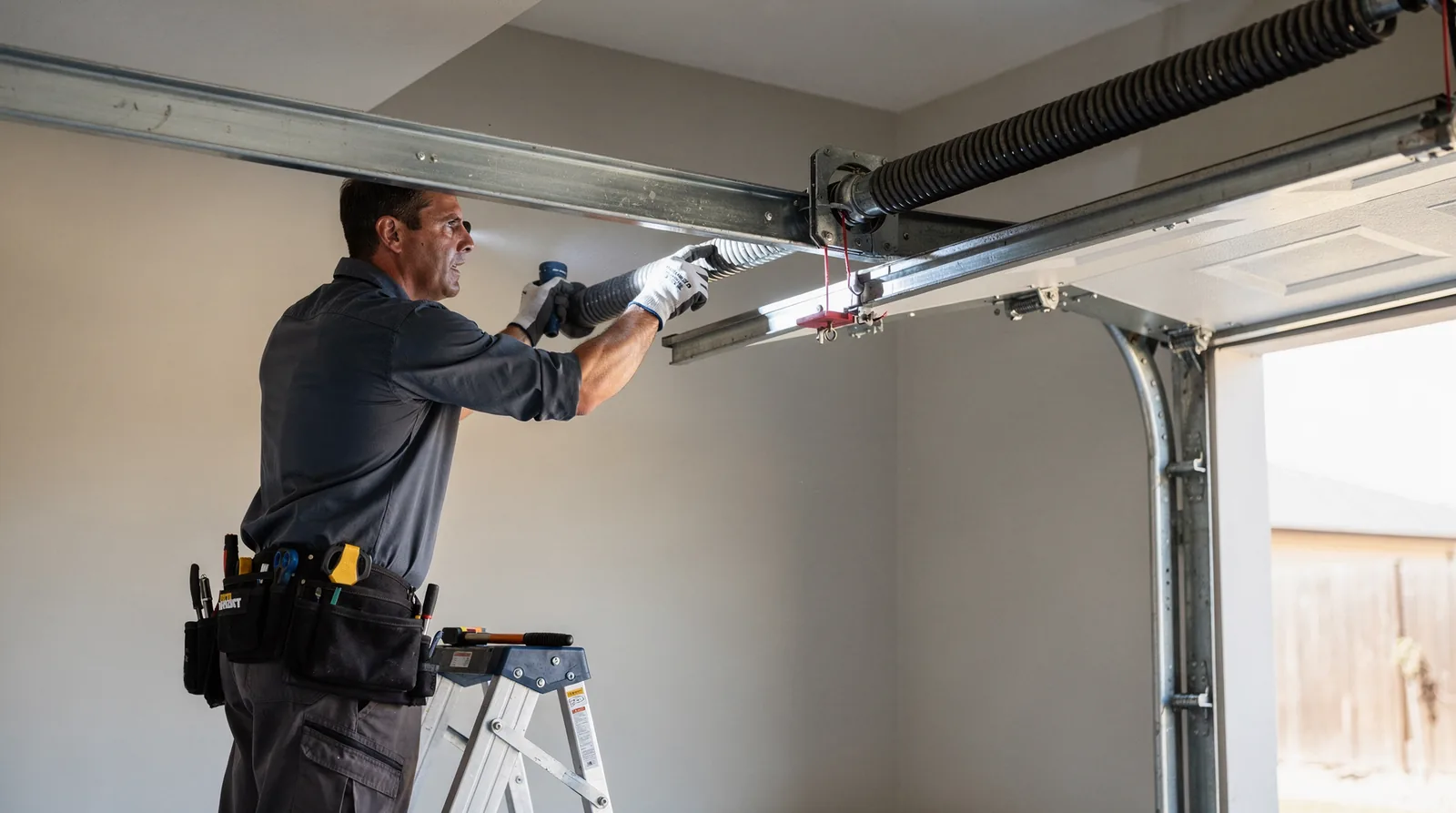
Broken springs rank among the top reasons Orange County homeowners ask, “Why is my garage door so heavy?” Springs carry the full weight of the door, and once they break or relax, that weight transfers straight to human arms or a straining opener motor. A door that used to lift with one finger suddenly turns into a two-hand struggle. This shift typically indicates a mechanical issue.
Spring failure doesn’t stay contained to the spring itself. A struggling spring forces the opener motor to compensate, and that extra strain frequently strips the opener’s gears. Left unaddressed, a homeowner faces a double repair: a failing spring and a damaged opener.
What Does a Broken Spring Look Like?
Recognizing broken garage door spring symptoms early prevents secondary damage. Common signs include:
- A door that feels unusually heavy or refuses to stay open partway
- Visible gaps or separation in the coiled spring above the door
- A loud bang at the moment of failure
- The opener straining, grinding, or stalling mid-cycle
Does the Opener Battery Play a Role Too?
Battery condition adds another layer to a heavy-door complaint. The average opener backup battery lasts only one to two years before performance declines. That battery serves as the primary power source during an outage. A door already fighting a weak spring gets no help from a fading battery, which only deepens the sense that the door has become impossible to lift.
Homeowners who notice a garage door is heavy to lift manually shouldn’t assume the fix is simple. Springs hold enormous tension and demand trained handling, not casual DIY adjustment. Scheduling garage door repair with Orange County technicians who recognize it as urgent protects both the homeowner and the door system from further damage.

Is the Opener Itself the Real Problem?
Yes, sometimes the motor and control system cause trouble that has nothing to do with springs, cables, or tracks. Pressing the button and watching the door sit motionless ranks among the most frustrating moments a homeowner faces. That stillness often points straight to the opener, not the door panel itself. Diagnosing the real source matters. Garage door repair Orange County technicians see both issues disguised as each other.
Opener trouble shows up in more than one way. Common culprits include:
- Faulty remotes that stop syncing with the wall unit
- Unusual grinding or clicking noises during operation
- Delayed response between button press and door movement
- Motor activity with no corresponding door movement
Sorting through these symptoms early separates a simple opener fix from a heavier structural concern, saving time and avoiding costlier repairs down the road.
Can a weak battery make the door feel heavier than it is?
A worn-down backup battery mimics the sluggish, straining feel that homeowners usually blame on the door itself. Opener batteries typically last only one to two years before performance drops off, depending on usage and battery type. Since that battery serves as the primary power source during an outage, a failing one leaves the opener unable to manage the door’s full weight, creating a false impression of mechanical failure elsewhere.
Does opener trouble ever mean the door mechanics are fine?
Often, yes. An opener struggling with a synced remote, a tired battery, or worn internal gears can produce symptoms nearly identical to a spring or track problem. Ruling out the opener first prevents homeowners from chasing the wrong repair.
Could Noise Signal the Same Issue?
Yes. Grinding, squeaking, or rattling sounds often point to the very same wear causing a heavy door. The garage door ranks among the most-used moving parts in any home. Daily cycles create wear and tear that shows up as noise and heaviness at the same time. A door that groans on the way up may also be the door that suddenly feels impossible to lift by hand.
Why does a noisy garage door matter?
Noise isn’t just an annoyance to tune out. It’s often an early warning sign of maintenance issues, worn-out parts, or safety hazards—the exact problems that make a door hard to lift manually. Catching the sound early often means catching the mechanical problem before it worsens.
What noises should prompt a service call?
Certain sounds tend to travel together with heaviness complaints:
- Grinding, which often points toward worn rollers or a struggling opener motor
- Squeaking, commonly tied to dry hinges or aging hardware
- Rattling, which can signal loose components along the track
Mysterious noises also rank among the most common opener problems homeowners run into, right alongside faulty remotes and other opener malfunctions. Ignoring them rarely makes them go away. A trained technician can trace the sound back to its source. Address both the noise and the lifting struggle in the same visit.
When Should You Call a Professional?
A simple test reveals whether a garage door needs expert attention: disconnect the door from the opener and pull down on the release cord. A door that refuses to stay halfway open on its own signals that maintenance is overdue. That single check answers the question for most homeowners facing a stubborn or heavy garage door.
Waiting too long carries real stakes. A door that struggles today often fails outright tomorrow, leaving a vehicle trapped or a family without secure access to the home. Annual maintenance catches spring wear and balance problems early. They escalate into a sudden heavy-door emergency that disrupts an entire morning.
How do homeowners know it’s more than a quick fix?
Beyond the disconnect test, persistent grinding, a door that drifts closed on its own, or visible sagging on one side points to professional-level repair. These signs often accompany broken garage door spring symptoms or a garage door off-track repair situation, neither of which is safe to handle without training. A door that feels heavy to lift manually, even after disconnecting it from the opener, also belongs on this list.
Homeowners across Orange County facing an unresponsive or heavy door can turn to Precision Door of Orange County, headquartered in Anaheim, for hands-on diagnosis. Recognizing common opener and door problems early saves homeowners time and often the cost of a bigger repair later.
Situations that call for immediate garage door repair Orange County professionals include:
- A door that won’t hold its position when disconnected from the opener
- Visible fraying or a garage door cable snapped off the drum
- A door hanging unevenly or grinding against its tracks
- Springs that look stretched, rusted, or visibly separated
Any one of these warrants a call rather than a DIY attempt.