

Violent shaking or bouncing during operation typically stems from worn rollers, damaged pulleys, or failing springs, even when tracks look straight and rollers appear round. Misaligned tracks or hardware issues on one side often cause uneven movement. Precision Door of Orange County technicians diagnose the exact cause and provide targeted repair, replacement, or installation services to restore smooth, quiet operation.
Why Is Your Garage Door Shaking When It Opens?
A shaking, bouncing motion during operation almost always signals a mechanical problem, not a random glitch. Garage door shaking when opening points to a specific part failing to do its job correctly, and ignoring the wobble usually lets the underlying issue get worse. Ignoring the symptom risks a stuck door, a snapped cable, or a costly emergency repair later.
What parts cause a garage door to jerk or vibrate?
Several components share the load every time a garage door cycles. Any one of them can throw off the whole system. Worn garage door rollers create uneven contact points along the track, producing a rhythmic bounce instead of smooth travel. Misaligned garage door tracks force the door to fight resistance at certain spots, which shows up as a jerky, stop-start motion. A door with poor garage door spring balance puts extra strain on the opener, causing shudders as it struggles to elevator or lower evenly.
Deteriorating trim around the base deserves attention too. Trim keeps the door’s operating environment dry and protected from moisture buildup near the hardware. Once that seal breaks down, moisture reaches nearby components and accelerates the same wear that produces rough, unstable movement.
Can a jerking door fix itself, or does it need a professional look?
A door that jerks rarely self-corrects; the wear behind it typically compounds with every open-and-close cycle. Garage door vibration troubleshooting helps narrow down whether rollers, tracks, or spring tension are to blame, but pinpointing the exact cause takes trained eyes. Homeowners across Orange County facing this issue can reach a local technician through Precision Door of Orange County, based in Anaheim, CA, for a proper inspection before minor wear turns into a bigger repair.
What Causes Garage Door Shaking When Opening?
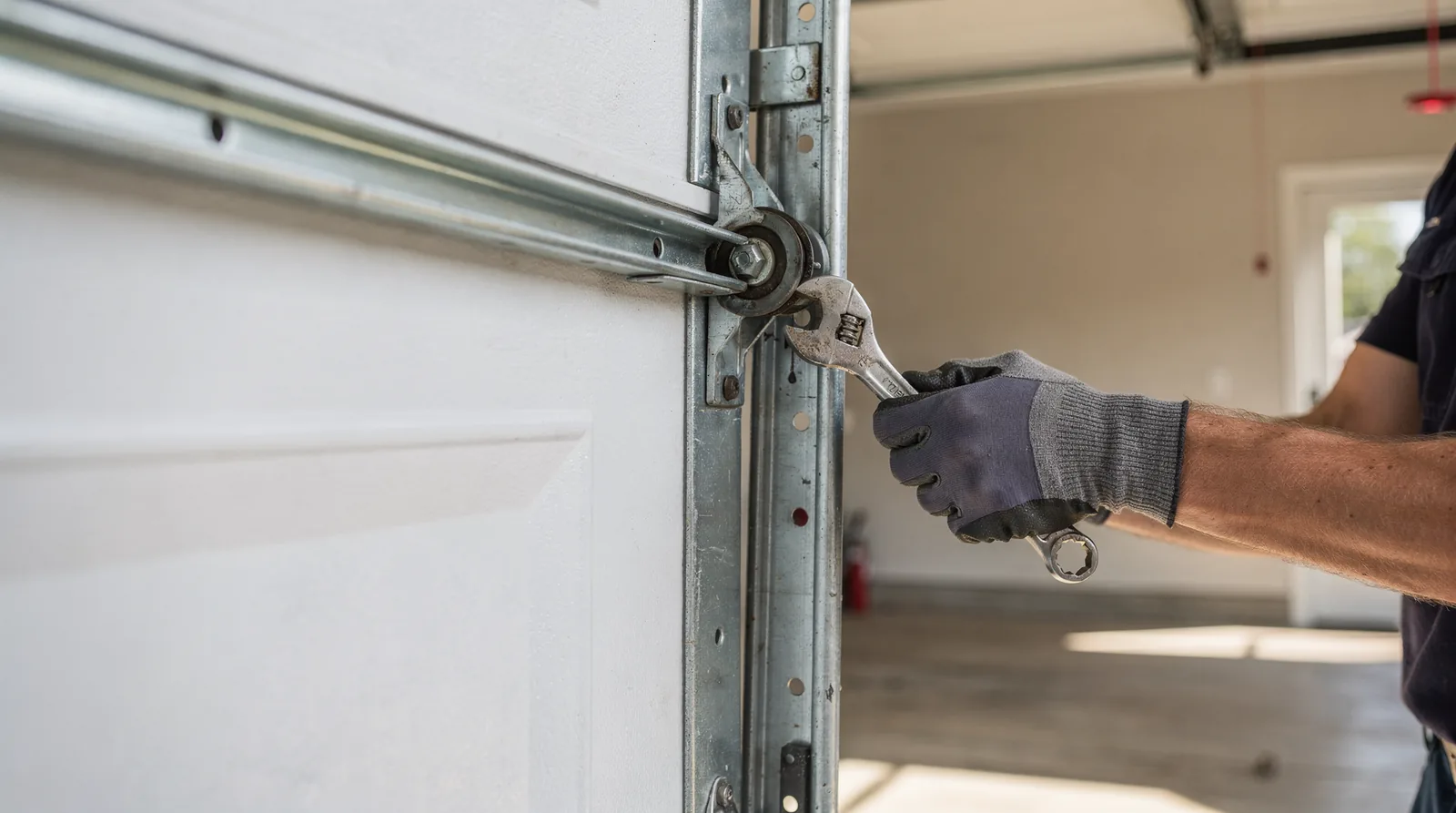
Mechanical wear drives most cases of garage door shaking when opening. Malfunctioning pulleys, damaged rollers, and worn springs rank among the most common culprits behind a door that jerks, bounces, or shudders during its cycle. Left unaddressed, this vibration accelerates damage to the track, opener, and panels, turning a minor fix into a bigger repair.
Diagnosing the exact source takes a systematic look at each moving part. A homeowner running through garage door vibration troubleshooting should check the following:
- Worn garage door rollers that have flattened or cracked, causing uneven movement along the track
- Damaged or slipping pulleys that disrupt the cable’s tension
- Springs that no longer hold proper garage door spring balance, forcing the opener to strain
Why does the door shake more on one side?
Uneven shaking often points to a single component wearing out faster than its counterpart. A roller or pulley on one side may be more exposed to weather or friction, throwing off the door’s balance during the lift.
Can trim damage cause a door to shake?
Trim itself doesn’t move the door, but its condition signals a bigger moisture problem nearby. Wood trim along the sides tends to wear first. That wrap sits closest to moisture pooling at the door’s base. Once that wood softens or rots, nearby hardware mounts can loosen, contributing to misaligned garage door tracks and shaky operation.
A resident dealing with recurring shaking doesn’t need to guess what’s failing. A technician from Precision Door of Orange County, based in Anaheim, CA, can inspect rollers, pulleys, and springs to pinpoint the exact source before it leads to a garage door jerking when closing.
Are Worn Rollers or Misaligned Tracks to Blame?
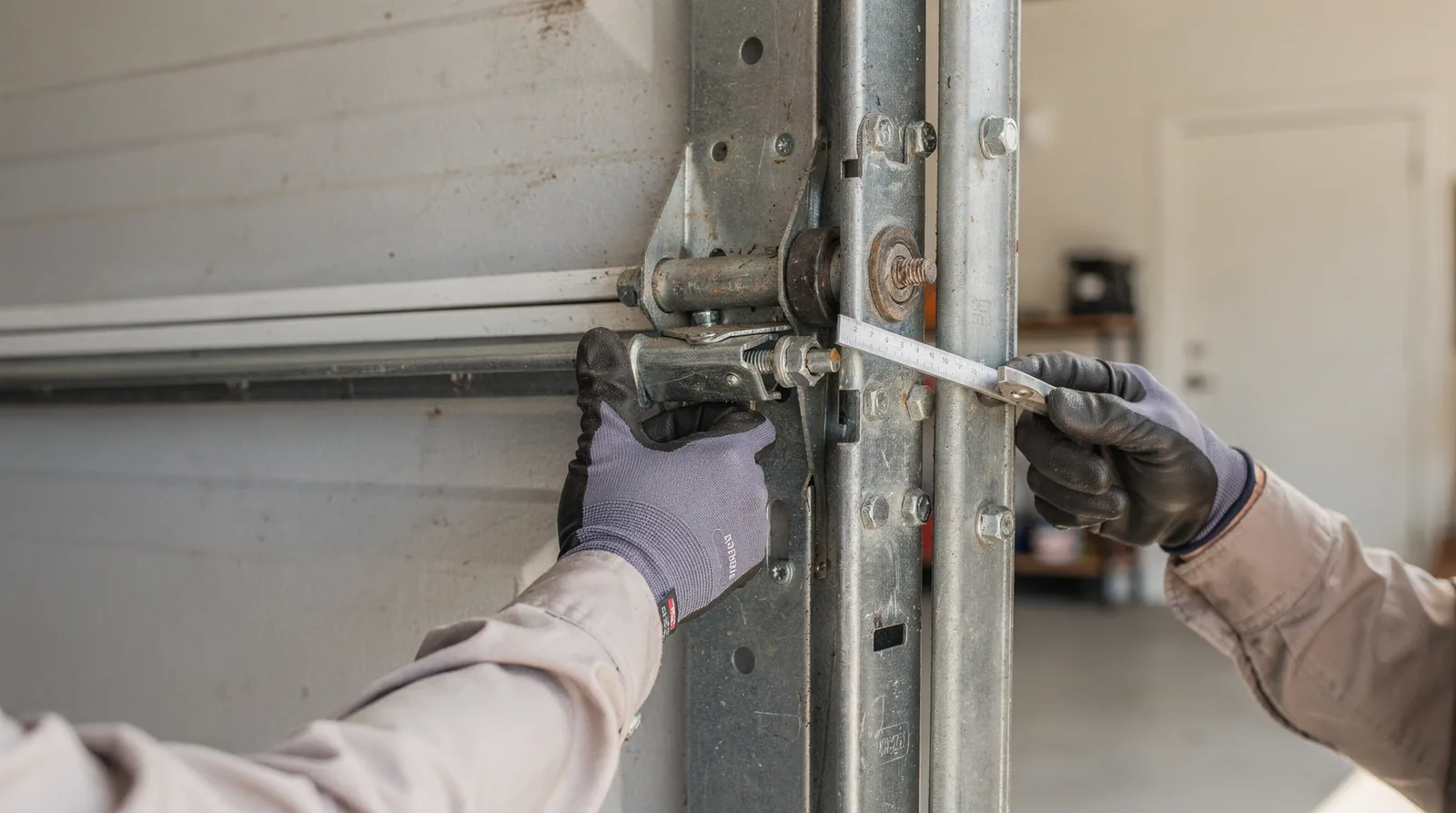
Rollers and tracks rank among the top suspects behind a bouncing door, but they’re not the only culprits. Garage door shaking when opening often traces back to hardware that’s simply out of alignment rather than broken outright. A door can look fine at a glance while still hiding the exact problem causing the jerky motion.
Misaligned garage door tracks create resistance that forces the door to jump instead of glide. Even a small gap between the track and roller path produces noticeable wobble. Worn garage door rollers compound this issue, since rounded wheels lose their grip and skip along uneven grooves.
The opener itself deserves attention too. An opener that sits off-center or isn’t perpendicular to the door places uneven strain on the whole system. That strain shows up as shaking or jerking when closing, even when the rollers and tracks appear undamaged.
Can garage door trim cause shaking?
Side trim and wrap that sit close to the door’s moving hardware wear down over time from constant contact and moisture exposure. As that wood deteriorates, it contributes to misalignment that leads to bouncing. Homeowners often overlook trim when troubleshooting garage door vibration, focusing only on springs or rollers.
What should homeowners check first?
Before assuming the worst, a quick visual inspection helps narrow things down:
- Confirm rollers are round, not apartment-sided
- Look for gaps between the track and the wall
- Check whether the opener sits centered and perpendicular to the door
- Inspect side trim for rot or warping near moving parts
A technician from Precision Door of Orange County, based in Anaheim, CA, inspects tracks, rollers, and garage door spring balance together, since these components rarely fail in isolation.
Is a Spring Balance Problem Causing the Jerking?
Yes, an unbalanced spring system ranks among the most common reasons a garage door lurches instead of gliding. Sudden, uneven movement during the lift signals that something in the system isn’t working correctly, and spring tension sits at the center of that system. When one spring carries more load than its counterpart, the door tilts, jerks, and strains against the opener with every cycle.
What does an unbalanced spring feel like?
A door with uneven spring tension often rises unevenly on one side before catching up on the other. Homeowners frequently notice the door hesitating partway through its travel, then lunging forward. That stop-and-lurch motion places extra stress on rollers, cables, and the opener motor.
Can trim damage affect spring balance?
Moisture-related wear doesn’t stay confined to the trim around a garage door. Deterioration that starts there gradually spreads to nearby hardware, including the brackets and hinges that keep spring tension even across the door. Left unaddressed, this creeping damage shifts weight distribution and worsens the jerking motion over time.
A few signs point toward a garage door spring balance issue rather than a simple track problem:
- The door feels noticeably heavier on one side when raised manually
- Jerking happens consistently at the same point in the cycle
- Cables appear loose or slightly frayed near the bottom brackets
- The opener strains audibly during the elevator
Spring tension is not a do-it-yourself adjustment. Springs carry significant force, and improper handling causes serious injury. Precision Door of Orange County, based in Anaheim, CA, sends technicians equipped to inspect spring balance safely and correct tension issues before they escalate into bigger repairs.
When Should You Call a Professional?
Persistent shaking, bouncing, or jerking that doesn’t resolve after a basic visual check calls for professional evaluation. Homeowners without diagnostic experience often can’t tell the difference between a loose bracket and a failing spring, and guessing wrong risks turning a small fix into a bigger repair. Service professionals identify the root cause and handle whatever repair, replacement, or installation the situation demands.
Precision Door of Orange County, headquartered in Anaheim, CA, offers hands-on evaluation for homeowners facing ongoing shaking or jerking that basic garage door vibration troubleshooting hasn’t resolved. A trained eye can spot issues that aren’t obvious from the driveway, including subtle track misalignment or hardware that’s loosened just enough to throw the whole system off rhythm.
Can Waiting Too Long Make the Problem Worse?
Yes. Trim and hardware near the base of the door absorb moisture over time, and that exposure accelerates wear. Catching this deterioration early through a professional inspection prevents the kind of slow damage that makes shaking worse the longer it goes unaddressed.
What Does a Professional Check That Homeowners Might Miss?
A technician evaluates the full system, not just the visible symptom. That typically includes:
- Garage door spring balance — uneven tension throws off the whole elevator cycle
- Worn garage door rollers — small apartment spots or cracks that aren’t easy to spot from below
- Misaligned garage door tracks — gaps or bends that cause the door to fight its own path
- Trim and hardware condition near the base, where moisture exposure does the most damage
Any of these can cause garage door shaking when opening or jerking when closing, and often more than one issue is at play at once. A full inspection catches combinations that a quick homeowner check often misses.