
Garage door safety inspections matter because they catch worn springs, frayed cables, and misaligned tracks before a sudden breakdown traps a vehicle or injures a family member. Precision Garage Door Service treats Orange County garages as a critical entry point, not just storage space, identifying hidden problems early to prevent breakdowns and extend the system’s operating lifespan.
Why Do Garage Door Safety Inspections Matter So Much?
Safety inspections matter because garage door systems carry far more mechanical risk than most homeowners assume. Repairing or installing a garage door may appear straightforward from the outside, but the process demands real technical know-how. A panel that looks simple to adjust often hides tension and moving parts that behave unpredictably without proper training.
That hidden complexity is exactly why a garage door safety inspection exists: to catch dangers before they turn into injuries. Orange County homeowners who skip this step take on risk they can’t fully see. Garage doors are heavy, and servicing one without training or certification creates a real risk of injury.
What makes garage door springs so dangerous?
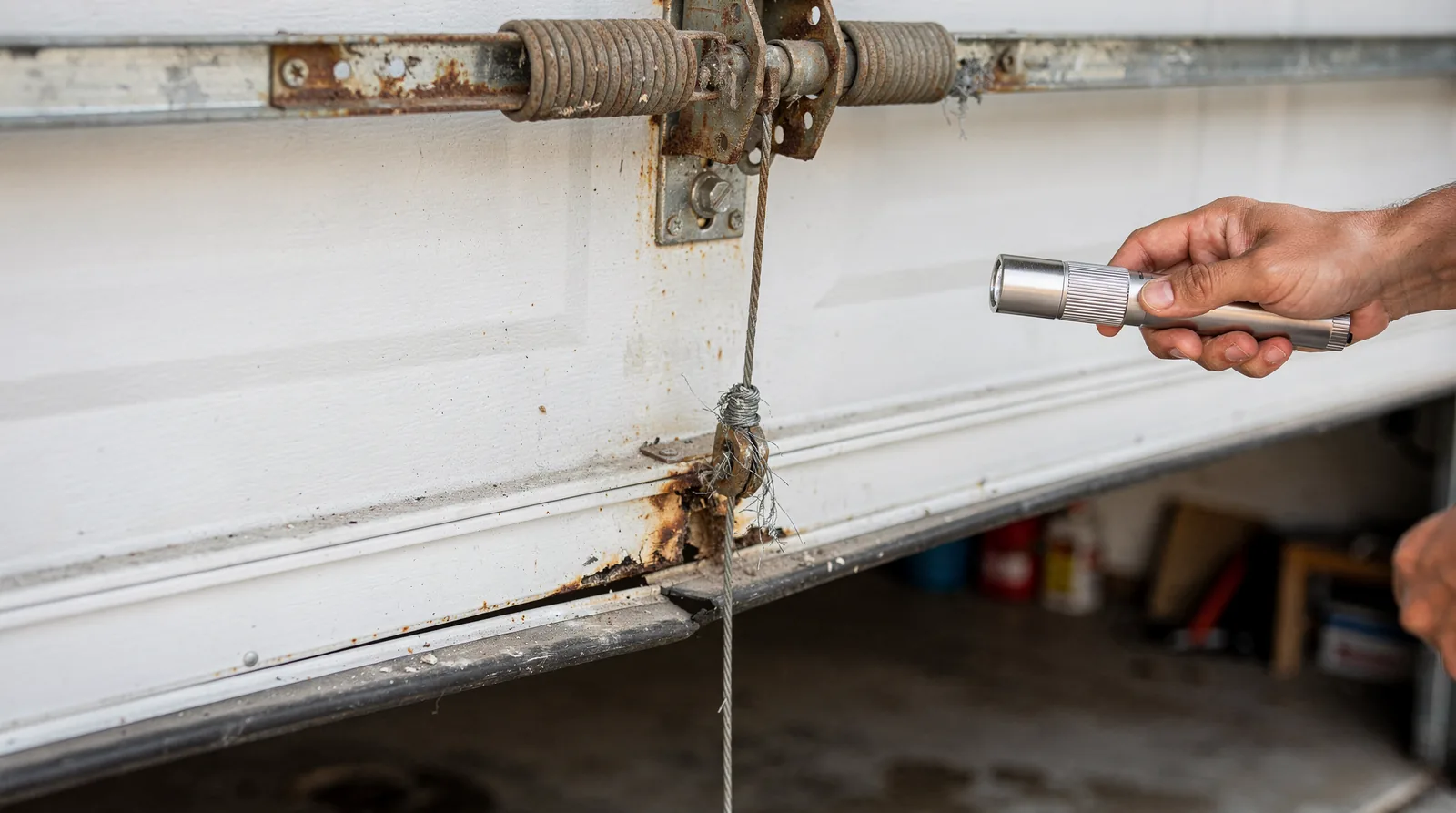
Torsion springs hold enormous tension to help lift a door that can weigh well over 100 pounds. If a torsion spring snaps while someone stands nearby, the sudden release of force can cause serious harm. This single fact explains why routine garage door inspection should never be treated as optional busywork.
Can regular upkeep actually prevent these risks?
Consistent garage door maintenance gives trained technicians a chance to spot spring wear, cable fraying, and track misalignment before failure happens. Catching these issues early protects family members, pets, and vehicles that pass through the garage daily. It also protects the door system from sudden breakdowns that turn a minor fix into a major repair.
Consider what a thorough inspection typically covers:
- Spring tension and wear, including torsion spring condition
- Cable and pulley integrity
- Track alignment and hardware tightness
- Overall balance and lifting mechanics
Skipping these checks doesn’t just risk inconvenience. It risks a snapped spring, a heavy door falling, and an injury that proper training could have prevented.
What Does A Professional Garage Door Inspection Cover?
A garage door inspection examines every major component of the system to catch small problems before they turn into breakdowns. Technicians evaluate the door panels, tracks, springs, and opener to confirm each part operates as designed. This comprehensive approach separates a real garage door safety inspection from a quick glance at the door as it opens and closes.
Orange County homeowners benefit from knowing what a complete inspection checklist includes. Trained technicians don’t just watch the door go up and down. They assess the condition of individual parts that work together to keep the system safe and reliable.
A typical inspection covers:
- Door panels and structure: checked for dents, warping, or misalignment
- Tracks: examined for bends, rust, or obstructions that cause binding
- Springs: inspected for wear, tension issues, or visible damage
- Opener: tested to confirm proper force, reverse function, and response
What standards guide a garage door inspection?
Industry checklists, including guidance associated with the Door and Access Systems Manufacturers Association (DASMA), outline what inspectors should evaluate on every visit. These frameworks give technicians a consistent structure so nothing gets overlooked, whether it’s a spring under tension or a track bolt working loose.
How often should homeowners schedule this checkup?
Consistent garage door maintenance relies on regular inspections rather than waiting until something breaks. Waiting for an obvious failure often means a homeowner has already lost the convenience of a working door, sometimes at an inconvenient moment. Routine checks catch wear early, protecting the household’s daily routine, vehicle access, and safety.
Why Do Garage Door Safety Sensors Deserve Attention?
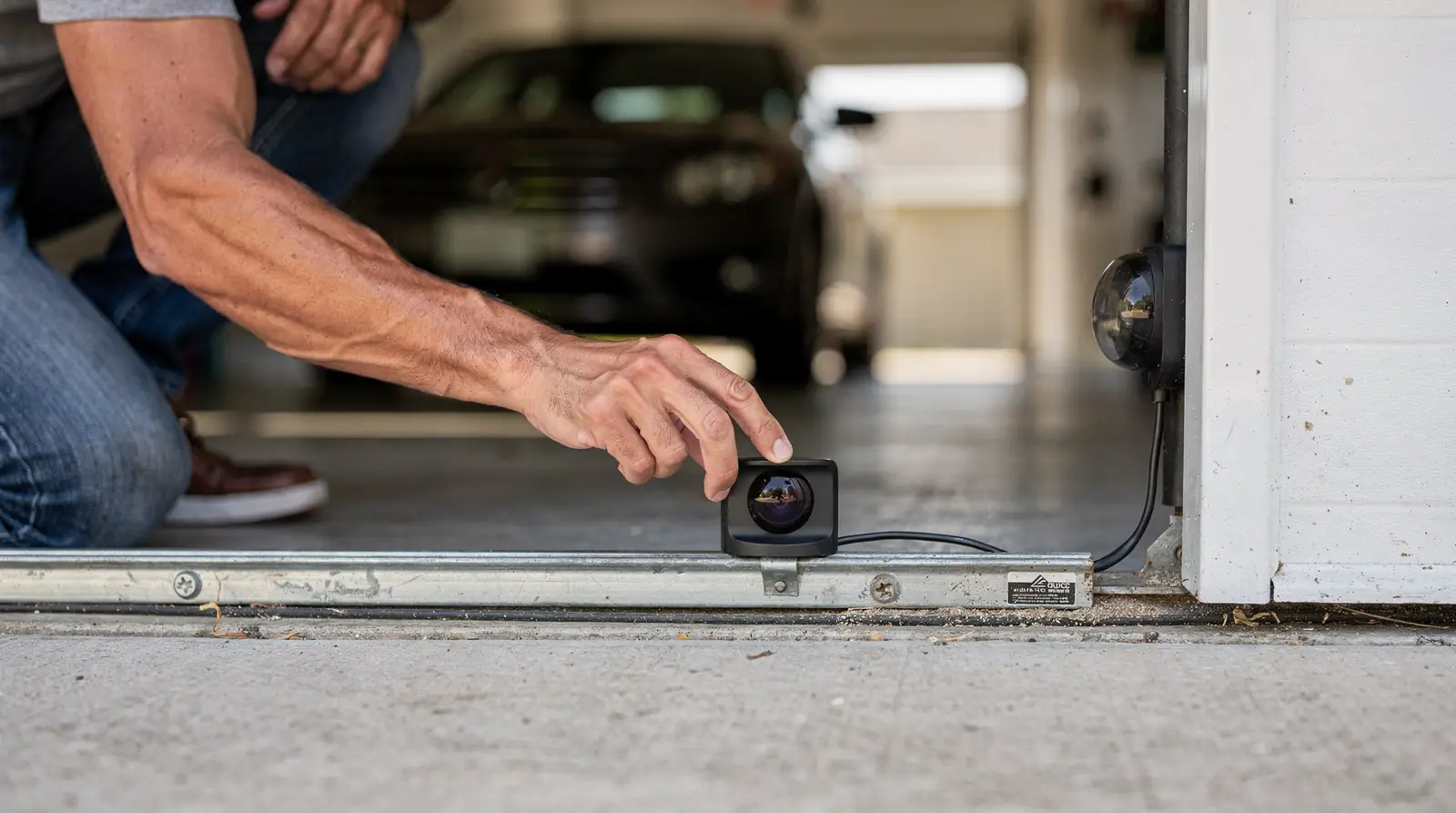
Safety sensors rank among the most critical safety features built into a modern garage door system. These small devices work quietly in the background. Their job carries serious weight for Orange County families who rely on a garage door every day. Skipping attention to these components risks a much bigger repair down the road, not to mention the safety hazard a malfunctioning sensor creates for kids, pets, and vehicles.
Mounted roughly six inches off the ground on either side of the door, the sensors project an invisible beam across the doorway. This beam acts as an electronic tripwire. Anything crossing that path, whether a child’s bike, a pet, or a stray toy, gets detected instantly.
What happens when something blocks the sensor beam?
The door automatically stops and reverses direction the moment the beam gets interrupted during the closing cycle. This automatic reversal prevents the door from crushing whatever sits in its path. Without this feature working correctly, a closing door poses a genuine danger to anyone or anything underneath it.
How does sensor function tie into a garage door safety inspection?
A thorough garage door safety inspection always includes checking sensor alignment and response time. Misaligned or dirty sensors fail to detect obstructions reliably, defeating their purpose. Regular garage door maintenance keeps these sensors calibrated. They function as designed, protecting households from preventable accidents.
Homeowners who treat sensor checks as part of routine garage door inspection habits gain real peace of mind. A door that reverses reliably every time protects family members and property alike, while neglecting this small detail invites risk that grows more expensive and more dangerous the longer it goes unaddressed.
What Happens If You Skip Garage Door Maintenance?
Skipped maintenance can turn a manageable system into a real safety hazard for Orange County families. Deferred garage door care doesn’t just cause inconvenience; it sets the stage for real financial and physical damage. Homeowners who put off basic upkeep often face consequences that reach far beyond a squeaky hinge.
Can a poorly maintained garage door actually become dangerous?
Yes, and the risk is more serious than most homeowners realize. Components installed or adjusted incorrectly can cause the entire door to collapse, putting anyone nearby at risk of serious injury. A heavy door can fail unexpectedly if not properly maintained, putting family members, pets, and vehicles parked below at risk.
Does neglecting small problems really cause bigger trouble down the road?
Absolutely. What starts as a small issue often turns into a project that requires professional correction, especially when a homeowner attempts a DIY fix without the right training. Trying to repair a malfunctioning door without proper knowledge frequently makes the underlying problem worse, meaning the eventual fix ends up far more involved than it would have been with routine attention from the start.
Beyond the door’s mechanical parts, the surrounding trim deserves attention too. Neglected trim allows moisture to seep in around the door’s edges. That moisture leads to unnecessary deterioration of materials that were otherwise sound.
A consistent garage door maintenance routine prevents these outcomes from stacking up. Consider what’s at stake when upkeep gets ignored:
- Structural failure risk: Misaligned or improperly installed parts can cause sudden collapse.
- Compounding correction needs: Unresolved issues from DIY attempts often require more extensive professional correction later.
- Material breakdown: Unprotected trim invites moisture damage that shortens the door’s working life.
A routine garage door inspection, paired with attentive care, keeps these risks in check before they escalate.
How Can You Stay Ahead Of Garage Door Problems?
Staying ahead of garage door problems starts with routine attention, not emergency phone calls. Regular garage door maintenance catches small issues before they turn into stuck doors, stranded cars, or safety hazards. Homeowners are responsible for keeping every system in the house running properly, and the garage door is no exception. Overlooking it can lead to sudden breakdowns that disrupt a morning commute or leave a home exposed.
What tools make basic garage door upkeep easier?
Keeping a few basic tools on hand pays off for most Orange County households. Doing so saves time and spares homeowners from paying for a service visit every time something minor goes wrong. A small toolkit turns a five-minute fix into exactly that, instead of a half-day wait for help.
Why does garage door trim need regular checking?
Wood trim along the sides of the garage door often wears out first. Its close contact with ground moisture at the base of the door makes it especially vulnerable to rot and warping. Watching this area closely helps homeowners catch deterioration before it spreads to the door panels or track hardware.
Staying proactive means building a simple routine:
- Schedule a periodic garage door safety inspection to check cables, springs, and sensors
- Inspect side trim and wood wrap for moisture damage
- Keep basic tools on hand for minor adjustments
- Call in professional help for anything involving springs or electrical components
Precision Door of Orange County, based in Anaheim, CA, supports local homeowners with garage door inspection and repair services designed to catch these issues early, protecting both safety and long-term system performance.