
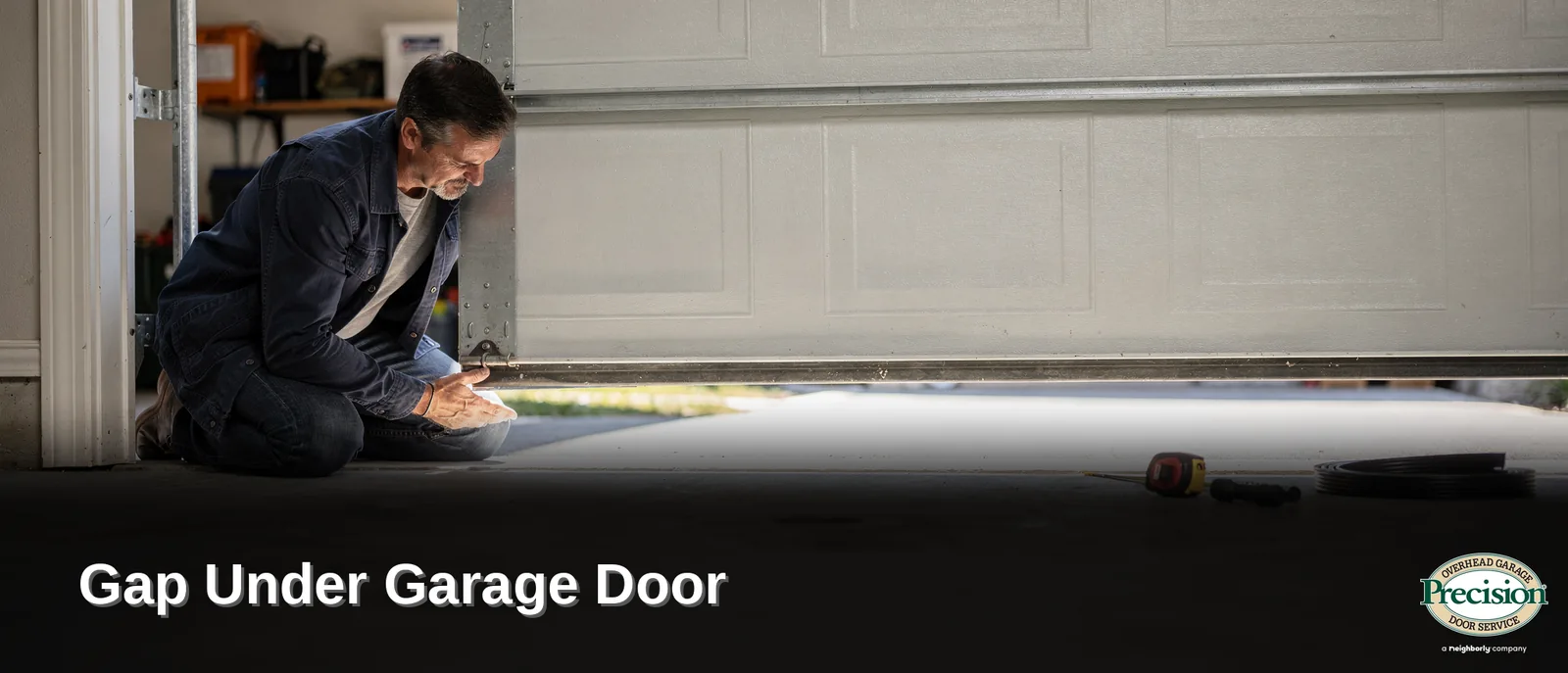
A gap under a garage door usually stems from a worn bottom weather seal, uneven concrete, misaligned tracks, or improperly set opener limit switches. This gap invites drafts, water, light, and pests like rodents and insects into the garage. Precision Garage Door Service diagnoses and repairs these issues, since garage door systems carry inherent dangers requiring professional attention.
Why Is There a Gap Under Your Garage Door?
Four culprits typically explain a gap under garage door panels: a worn weather seal, uneven concrete, misaligned tracks, or a poorly set limit switch. Garage doors and their openers are mechanical systems. Small issues like this develop naturally as parts age and wear down over time. Left unchecked, a bottom gap invites drafts, water, and unwelcome pests into the garage.
What usually causes the gap?
A handful of mechanical factors tend to be behind it. The table below breaks down each cause and what it typically signals.
Does catching it early actually matter?
Yes, addressing a bottom gap early works the same way as spotting other opener problems before they escalate. Homeowners who catch these issues quickly tend to save time and sidestep pricier repairs down the road. Waiting rarely makes the fix simpler. In most cases, it just leaves more time for drafts, moisture, and rodents to work their way in.
Solutions vary depending on the root cause. A garage door weather seal replacement solves a cracked or flattened seal. A garage door bottom seal uneven floor situation often calls for track adjustments instead. When the opener itself is the issue, a garage door travel limit adjustment resets how far the door travels before stopping. Pinpointing the actual cause first is the step that makes any of these fixes stick.
What’s Causing Gaps in Your Bottom Corners?
Worn corner trim causes most gaps at the bottom edges of a garage door. Corner trim keeps the door running smoothly while protecting the panel from moisture damage where it meets the concrete slab. Once that trim shrinks, cracks, or pulls away, an open gap under garage door corners becomes an entry point for outside elements.
Orange County homeowners often report the same pattern: new gaps appearing at the bottom corners after moving into a home, with wind whistling through and unwelcome visitors following close behind. Rodents and insects find these small openings easy to exploit, especially in corners where the seal never sat flush in the first place.
What gets in through a corner gap?
Corner gaps don’t just let in drafts. They open the door to several nuisances at once:
- Wind and outdoor drafts affecting garage temperature
- Rodents seeking shelter or a way indoors
- Insects and other small pests
- Dust and debris blown in from outside
Is expanding foam a real fix?
Foam sealant offers a temporary patch, not a lasting one. Some homeowners fill corner gaps with expanding foam to block pests quickly. It can slow the problem in the short term. Foam breaks down under weather exposure and door movement, though, so it rarely holds up as a permanent solution.
A proper garage door weather seal replacement addresses the root cause instead of masking it. Trim and seals designed for the corners restore the barrier that keeps drafts, moisture, and pests where they belong: outside.
Is Your Garage Door Weather Seal Worn Out?
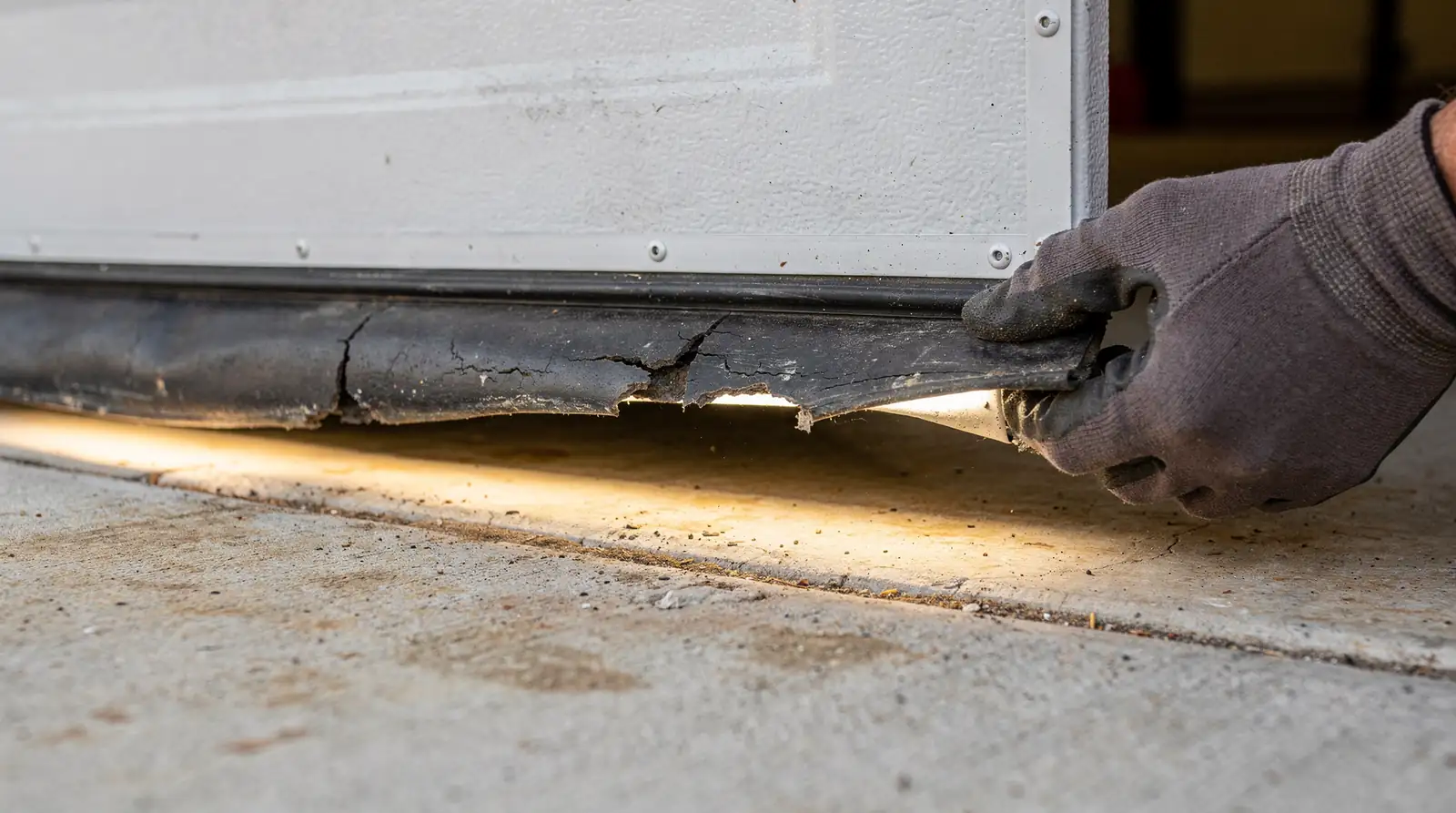
Cracked, flattened, or brittle weatherstripping signals a seal past its useful life. Most garage doors depend on vinyl or rubber weatherstripping along the bottom edge to press against the ground and block out drafts, water, and pests. Once that material hardens or splits, the seal stops flexing, and a gap opens under garage door panels along the floor.
The wood trim on either side of the door often shows trouble first. Because this wrap sits closest to ground-level moisture, it tends to wear out before other trim pieces, much like the bottom seal itself. Homeowners who spot soft, discolored, or warped wood along the door’s edges are usually looking at the same moisture exposure that degrades the seal below.
How Can Homeowners Tell If the Seal Needs Replacing?
A visual check goes a long way. Look for flattened ridges, cracks along the strip, or sections that no longer touch the garage floor when the door closes.
- Seal feels stiff or brittle instead of flexible
- Visible daylight along the bottom edge
- Drafts or musty odors near the door on windy days
- Wood trim nearby looks soft, swollen, or discolored
Any of these signs points toward a garage door weather seal replacement.
Does the Material Matter When Replacing a Seal?
Yes, material choice affects how long the fix lasts. Choosing the right trim and seal materials reduces how much moisture works its way through worn spots, extending the door’s life and keeping it running without interruption.
Skipping proper materials invites the same problem to return within a season. A seal that matches the door’s design. Sits correctly against the floor protects both the weatherstripping and the surrounding wood trim from repeat moisture damage.
Could an Uneven Floor Cause Your Seal Gap?
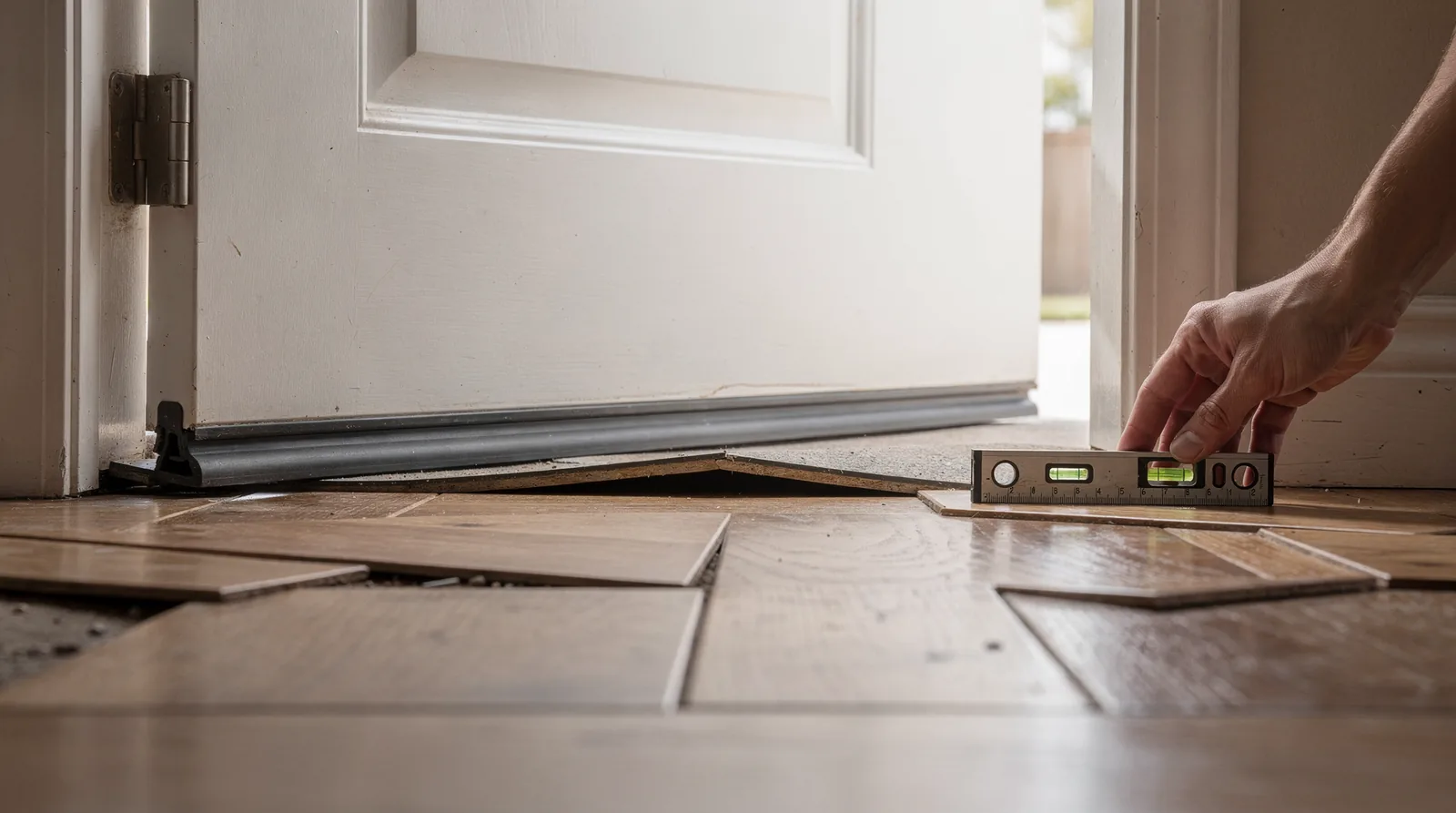
Yes, a sloped or settled slab ranks among the most common causes of a gap under garage door panels, even when the seal itself looks intact. Concrete shifts gradually over the years. Garage door components wear unevenly across that same span, much like any mechanical system exposed to daily use. What starts as a snug seal along the floor can slowly open into a visible gap as the slab settles unevenly beneath the threshold.
This matters for more than looks. A properly sealed garage door supports a home’s energy efficiency, security, and overall condition, not just its curb appeal. Once a garage door bottom seal uneven floor situation develops, drafts, moisture, and pests find their way through the widening gap.
Does the Type of Seal Material Matter on an Uneven Floor?
Material choice makes a real difference once the slab stops sitting level. Selecting the right trim and seal materials limits how much moisture. Air pass through gaps created by an uneven surface. Homeowners considering a garage door weather seal replacement should weigh options based on how well each material flexes against an irregular floor line.
Common factors worth reviewing include:
- Flexibility of the seal material against slab irregularities
- Durability under repeated compression from daily door cycles
- Moisture resistance to reduce long-term wear near the threshold
Can Adjustments Fix a Gap Instead of Full Replacement?
Sometimes yes. Before jumping to a full fix for a garage door bottom gap project, a garage door travel limit adjustment may close small gaps by resetting how far the door travels downward. This adjustment won’t correct a badly sloped slab, but it often resolves minor unevenness affecting the seal’s final resting point.
How Do You Fix a Garage Door Bottom Gap?
Fixing a gap under garage door panels starts with identifying the cause before applying a solution. Worn weatherstripping, an uneven slab, or misaligned tracks each call for a different repair. A proper diagnosis matters more than guessing. Precision Door of Orange County, based in Anaheim, CA, helps homeowners across Orange County pinpoint the source of stubborn gaps and close them for good.
Waiting rarely helps. Like other opener issues that worsen with neglect, a bottom gap is often quicker and less costly to fix when homeowners act early with informed troubleshooting instead of putting it off.
What Does It Take to Fix Garage Door Bottom Gap Issues?
Closing a persistent gap usually involves more than a quick patch. A repair visit often includes one or more of the following steps:
- Garage door weather seal replacement to swap out cracked or flattened vinyl or rubber strips along the bottom edge
- Adjustments to the track alignment so the door sits evenly across the opening
- A garage door travel limit adjustment, which resets how far the opener lowers the door for a snug, consistent seal
Why Won’t the Seal Sit Flush Against the Floor?
An uneven slab is a common culprit. A garage door bottom seal uneven floor condition happens when the concrete has settled, cracked, or was poured unevenly beneath the door’s path. In these cases, a flexible or contoured seal, paired with track adjustments, closes the remaining gap far better than a standard strip alone.
Homeowners looking to fix garage door bottom gap problems permanently benefit from a technician visit rather than trial-and-error fixes. A trained eye catches misaligned limit switches or worn seals that store-bought weatherstripping alone won’t solve, protecting the garage from drafts, moisture, and unwelcome pests.